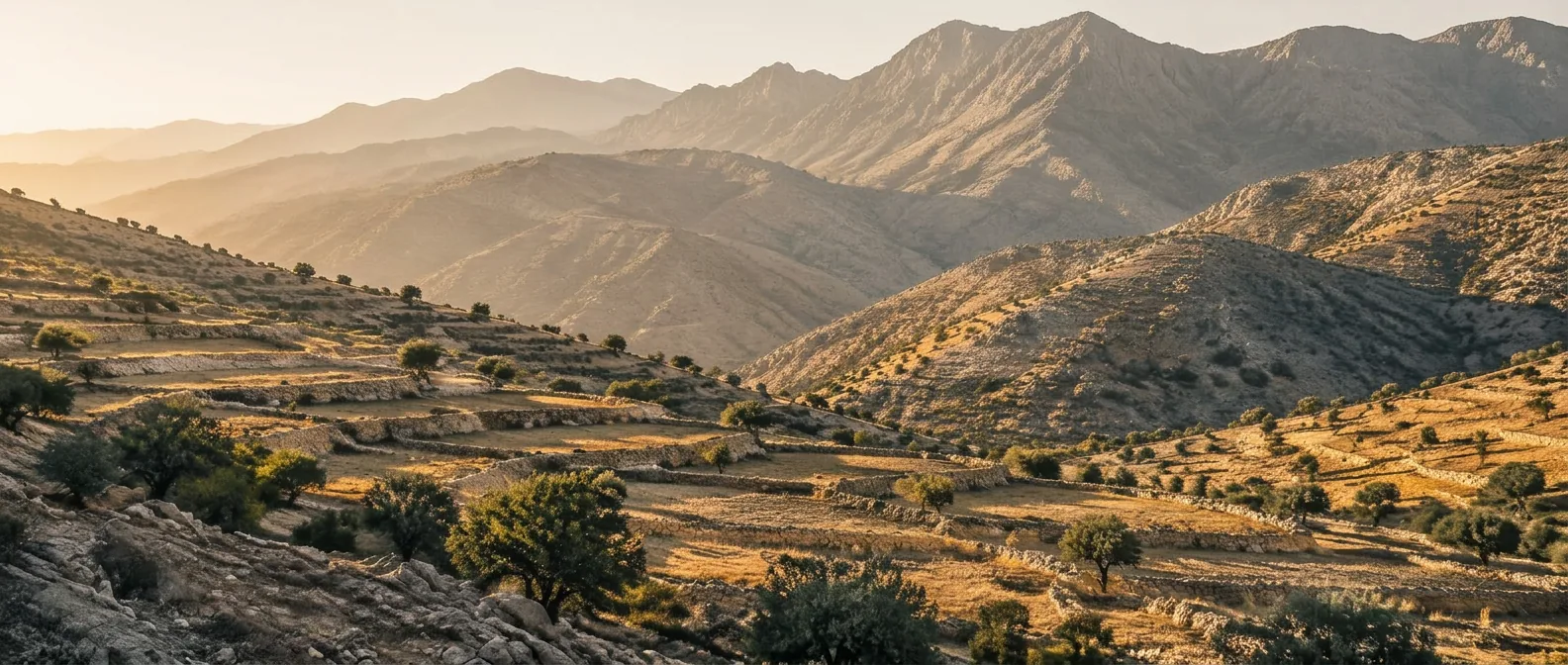
It starts in Moroccan soil.
usul begins with what Morocco grows. Each ingredient in our formulas comes from the place that made it known, and several carry a protected origin under Moroccan law. The modern actives are there to support them, not to replace them.
WHERE IT GROWS
Protected designation of origin. Picked by hand at dawn, mid-October to mid-November.
Protected geographical indication. The argan forest is a UNESCO biosphere reserve.
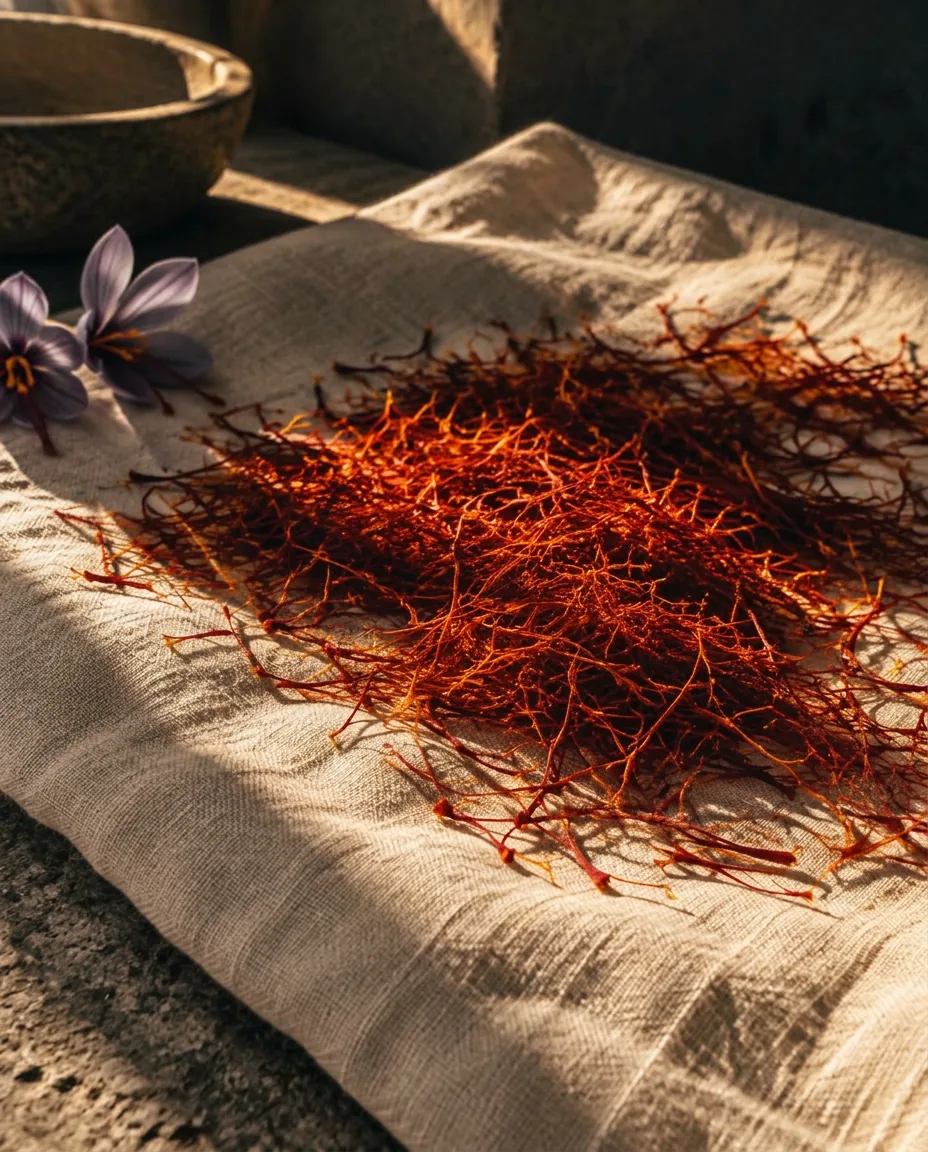
Three threads to a flower.
Saffron is the stigma of the crocus flower, and each flower holds three. In Taliouine, at the foot of Jbel Siroua, the crocus blooms for a few weeks each autumn. From mid-October to mid-November the flowers are picked by hand at dawn, before they open, and the threads are separated and dried. Taliouine and its neighbouring villages grow about 90% of Morocco's saffron, and Taliouine saffron carries a protected designation of origin.
- 3
- threads in each flower
- 150–170
- flowers for a single gram
- 4 weeks
- of harvest each autumn
- 90%
- of Morocco's saffron grows around Taliouine
IN USUL — the anchor of all four Saffron Soul formulas: the rise, the goldpress, the dawn, the dusk.
The tree of the Souss.
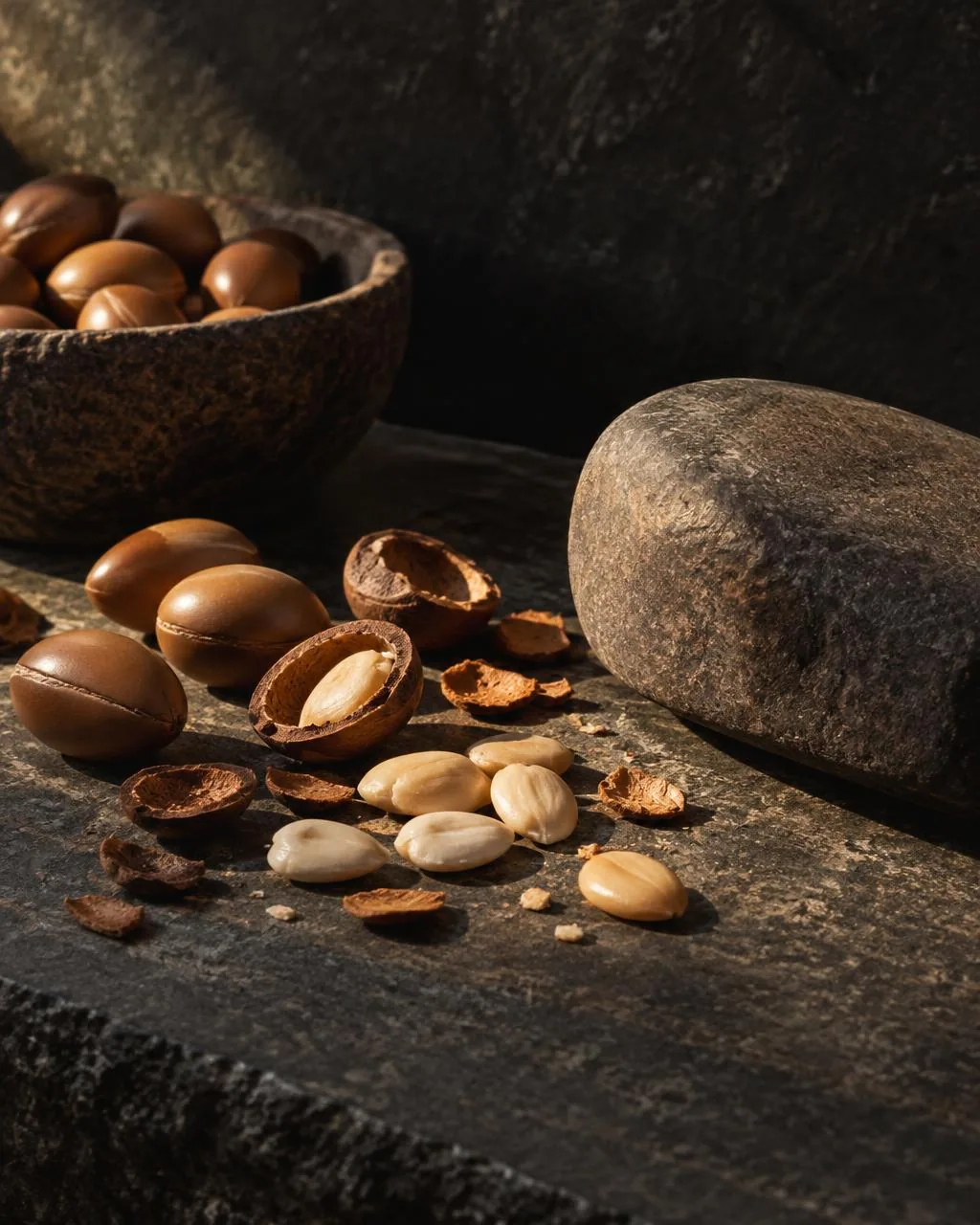
Argan grows wild in southwestern Morocco, between the Atlantic coast and the Atlas mountains. Its fruit is gathered, the hard nuts are cracked by hand between two stones, and the kernels are pressed for oil. Much of this work is done by women's cooperatives. The argan forest has been a UNESCO biosphere reserve since 1998, and UNESCO listed the knowledge around the tree as intangible cultural heritage in 2014.
- 1998
- UNESCO biosphere reserve
- 830,000+
- hectares of argan forest in the reserve
- 2014
- UNESCO intangible cultural heritage
- 10 May
- International Day of Argania
IN USUL — in the goldpress, for richness and comfort.
Make room for usul.
Saffron Soul arrives in 2027, in small batches. Join the list for first access and notes from the source.